Improving Labor Productivity at SMEs through DX
Labor Productivity
Goals and KPI
2030
- Goal
- Create solutions that enable anyone to move forward through our business platform, which serves as a base for digitalization and DX, and help achieve sustainable management, primarily at SMEs
- KPI
-
Number of Japanese SMEs using our business platform: over 1 million companies
* Our business platform refers to Chatwork and a suite of services related to DX solutions based on the use of Chatwork
2024
- Goal
- Make a significant contribution to improving the efficiency of business communication in Japan through our business chat service, which has the number one market share among SMEs, and increase support for DX based on this contribution
- Initiatives
- Promote business strategies that contribute toward DX at SMEs and improvement of productivity through greater adoption of Chatwork and promotion of BPaaS (number of SMEs using Chatwork as of the end of FY2024: more than 880,000 companies; key service fields being provided with BPaaS: accounting, labor relations, recruitment, sales office)
SDGs Being Addressed by Activities



Approach and System
Approach to Improvement of Productivity at SMEs
To achieve improvement of productivity at the more than 3.3 million Japanese SMEs, it is necessary to understand the management and frontline issues unique to SMEs and have an innovative and efficient approach that solves these issues at the unit of several tens of thousands.
We thoroughly enhanced the ease of use of business chat—which may be used daily with high frequency by the employees of all occupations and serves as the core of communication within and outside a company—so that it can be fully leveraged even by users from SMEs not familiar with IT. This has enabled SMEs with few IT specialists to take their first step toward adopting IT. As a result, our business chat has high customer satisfaction (service cancellation rate of 0.25%, as of December 31, 2024) and grew into a business chat service for SMEs boasting the highest number of users in Japan*1 being used by 886,000 companies (as of the end of December 2024).
Chatwork business chat for SMEs
With this business chat as the foundation, we selected excellent SaaS*2 out of the various services for SMEs developed and provided by IT companies, including those by us, to build and provide a DX promotion platform offering one-stop support where dedicated DX advisors select and implement the most suitable services for each company. In this way, we create an environment that provides comprehensive support for solving the DX and operational issues of SMEs.
In deepening our understanding about the frontlines of SMEs through the provision of these services, we found that, despite many companies struggling with chronic labor shortages, they are finding it difficult to fully leverage multiple IT and SaaS solutions that could be the key to solving these shortages. This challenge is becoming a bottleneck for advancing the adoption of IT and DX.
Therefore, we developed a service that allows even SMEs with difficulties leveraging SaaS to enjoy the rewards of DX. We are offering business process as a service (BPaaS), a SaaS where entire business processes are outsourced.
Chatwork Assistant(TAXITA) cloud-based business process outsourcing service
Numerous routine operations within companies can be efficiently processed using SaaS and AI. These include accounting journalizing, invoicing, labor expense settlements and year-end adjustments, responding to headhunting emails, and creating sales quotations. We refer to these as “formalizable operations.” In this service, after identifying these operations, we develop efficient operational processes within our Group using SaaS, APIs*3, and AI on behalf of SMEs facing difficulties in using SaaS. BPaaS crew—who are specialized staff versed in these operations—use Chatwork and other tools to efficiently carry out operations for SMEs after receiving their requirements and providing them with the results.
This service is similar to business process outsourcing (BPO), which outsources parts of an operational process, but differs significantly in three aspects. Firstly, it does not require the creation of operational manuals or the training of staff, which is often necessary for BPO. Secondly, it can be used flexibly—in units of 10 hours—according to the workload, such as during busy periods or when a staff member suddenly resigns. Finally, even though the operations are being handled by staff with vast operational experience, this service can be requested at a lower cost.
By combining Chatwork and BPaaS, we hope to offer the benefits of DX to Japanese SMEs, which are estimated to number over 3.3 million companies, and help them improve productivity.
- *1 According to a survey of monthly active users (MAUs) conducted in July 2025 by Nielsen NetView; 44 applicable services selected by kubell Co., Ltd., including Chatwork, Microsoft Teams, Slack, and LINE WORKS.
- *2 SaaS is an abbreviation of software as a service, which is a service that allows a software on the cloud to be used through the internet; software can be used by accessing a cloud service provided by the vendor without the need to install it on a computer etc.
- *3 API is an abbreviation of application programming interface, which is a mechanism for connecting software, programs, and web services
Promotion System
To achieve this approach, at our Group, kubell Co., Ltd. is working on spreading the adoption of Chatwork. At the same time, kubell partner Co., Ltd. was established in April 2024 as a dedicated subsidiary for promoting the BPaaS business. Furthermore, in July 2025, we merged MINAGINE Co., Ltd.—our Group company providing HR and labor management services—with kubell partner to further strengthen our BPaaS promotion system.
Value Provided to Customers and Society through Business

Main Initiatives
Initiatives in Medium-Term Management Plan
At our Group, we aim to establish our position as the No.1 BPaaS company for SMEs by 2026 through growing BPaaS using Chatwork as the foundation. To achieve this, we are advancing three strategies under our Medium-Term Management Plan. The first strategy is our communication platform strategy that enhances business platform value through further increasing the number of Chatwork users and the percentage of active users. The second strategy is our BPaaS strategy that achieves DX at even more SMEs by expanding the range of operations that can be supported through BPaaS. The third strategy is our incubation strategy that develops and implements the pillars of future value creation by leveraging Group assets for new businesses and undertaking research and development toward AI use.

We hope to agilely combine these three strategies to achieve DX—which has not been making progress so far—at the more than 3.3 million Japanese SMEs and contribute toward improving their productivity. Improving productivity at SMEs through DX is our Group’s very mission, and we are working as one Group to achieve it. For the latest plan and results, please refer to the Medium-Term Management Plan and the latest financial results posted on the IR page.
Medium-Term Management Plan and financial results
Alleviation of SMEs’ Labor Shortages and Improvement of Productivity Achieved Using BPaaS
Business process as a service (BPaaS) is a service that allows cloud-based business process outsourcing (BPO).
SaaS mainly targets tech-savvy early adopters in IT who can select, introduce, and fully leverage tools at their own companies. Meanwhile, BPaaS targets the majority of users making up two-thirds of the people at Japanese companies who face difficulties in introducing and leveraging IT and SaaS at their companies.
Furthermore, in BPaaS, consultations and requests to dedicated operators are made through the business chat Chatwork, which even SMEs can easily leverage. There are also no requirements such as for specialized knowledge regarding IT and SaaS or the creation of operational manuals. This significantly lowers the hurdle for service adoption. There is also no need to purchase expensive software or build large-scale systems, and the service adopts a fee system that minimizes initial investment. As such, it can be easily introduced even by SMEs that are lacking in financial resources. It can also be used in units of 10 hours per month, allowing flexibly use according to the growth stage or necessary workload.
To handle the requested operations, within our Group, we have developed automated engines through collaboration with SaaS and API and efficient, automated processes using AI. BPaaS crew—who are highly specialized, dedicated staff—use these engines and processes to carry out operations. By developing operations that hybridize technology and people, we achieve efficient and stable processing of operations that were difficult under conventional BPO.
Unlike BPO, which is a service that simply carries out work on behalf of a customer, BPaaS provides digitally transformed operational processes through sophisticated operations using API collaboration with AI and various SaaS as mentioned above. Manhours for operational processes are drastically reduced through automatic handling by systems, and the service can be provided with few human resources.
Furthermore, BPaaS significantly reduces the need for companies to employ their own expert human resources for non-core operations. Besides IT engineers, instead of employing in-house staff with accounting, labor relations, and other specialized knowledge, the necessary operations can be outsourced to external experts at low cost through BPaaS. This allows competitiveness to be maintained even in business environments with severe labor shortages, and more management resources can be invested into core operations.
In this way, BPaaS solves management issues of SMEs—including labor shortages, inadequate budgets, and a lack of IT personnel and literacy—to provide the values of manpower saving and productivity improvement.
In the future, for the operational fields being covered by BPaaS, we aim to both widen and deepen the scope of service. Specifically, together with widely covering non-specialized fields such as secretarial and administrative operations, we plan to expand the service to fields that require expert knowledge, such as licensed professionals. Through this, we aim to achieve a business that provides one-stop support for non-core operations to Japanese SMEs and helps improve their productivity.
About BPaaS

Target Customers of BPaaS
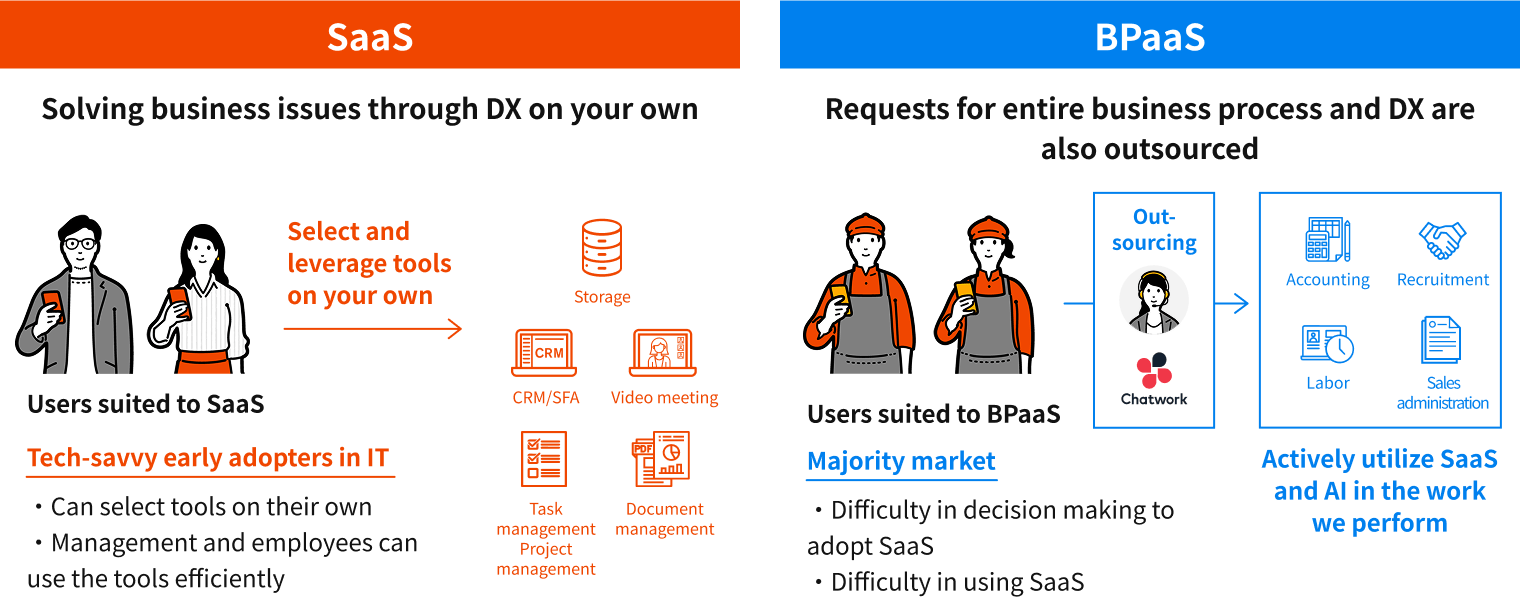
Image of Our BPaaS
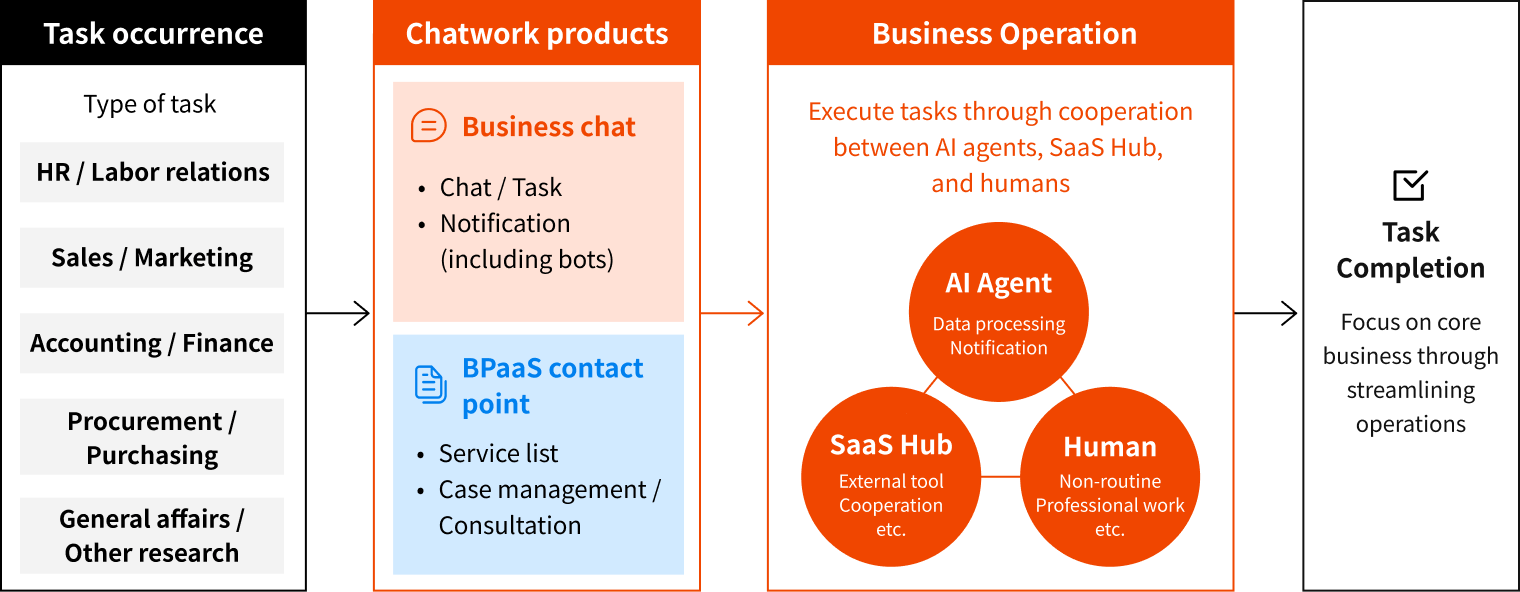
Example of Productivity Improvement at SME Using BPaaS
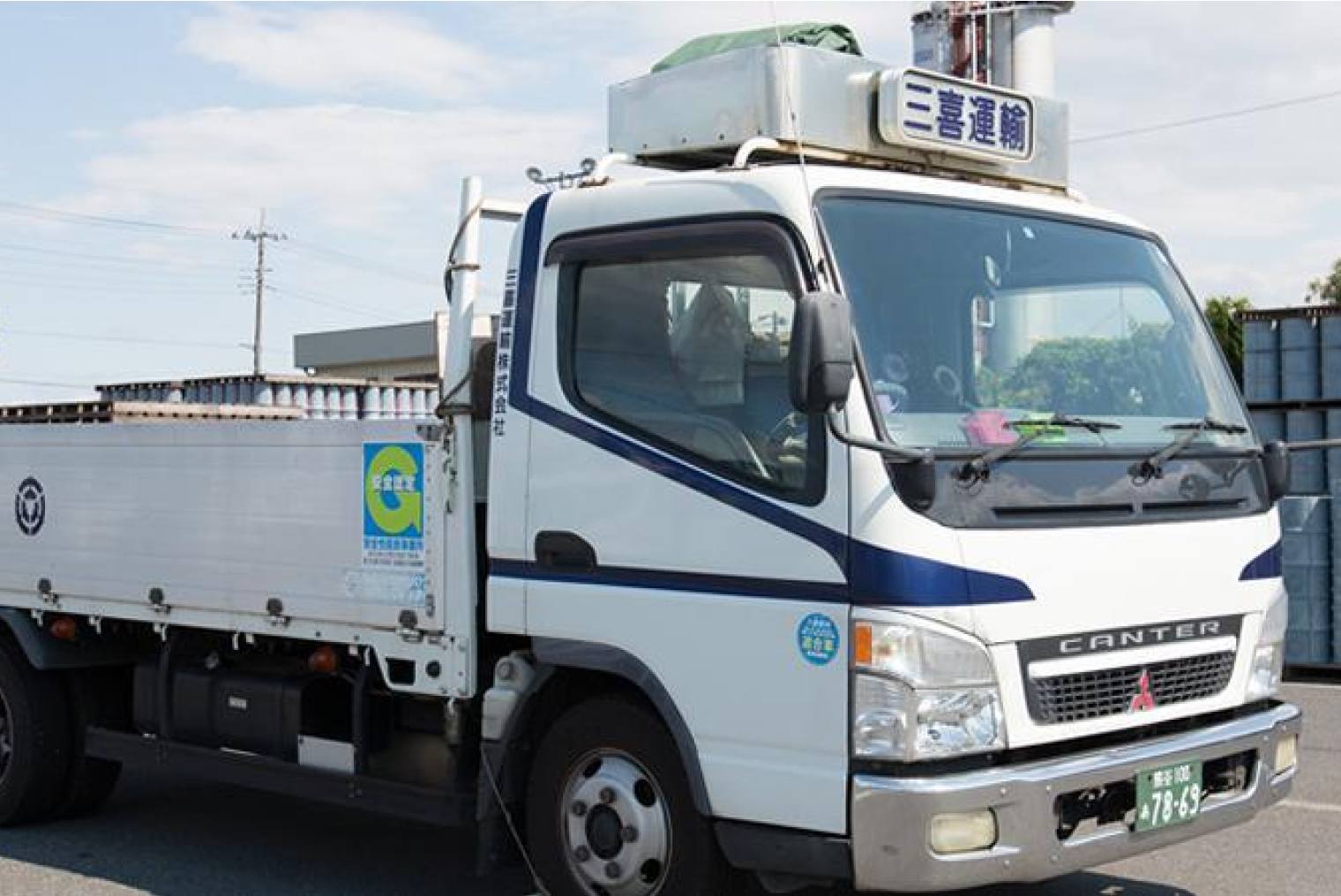
SANKI UNYU Co., Ltd.
“Succeeding in freeing up one staff’s manhours by outsourcing billing operations”
Before and After Introducing BPaaS
| Issues | Solutions | Effects |
|---|---|---|
|
|
|
User Comments
At SANKI UNYU Co., Ltd., the Administration Department is in charge of general affairs, accounting, and system implementation. With the company expanding to approximately 120 employees across eight business locations, the workload of back-office operations became a major issue. In particular, there was an increase in the workload of accounting and billing operations, and while we wanted to improve the efficiency of operations using IT, we could not allocate time for the implementation of new systems or the sorting of operations.
It was under these circumstances that we learned about the existence of Chatwork Assistant, and we decided to adopt the service in hope of outsourcing accounting and labor relations operations and gaining support for system implementation. First, we requested the development of a manual for subsidy applications. Then, we moved to the optimization of billing operations, which had significant workload. Spreadsheets were used to build a management system so that we could understand the progress and details of invoice processing in real time. This allowed us to free up one staff’s manhours as well as improve the speed of information sharing.
It also improved the system for expense settlement. Centralized management became possible by linking application forms with spreadsheets, significantly reducing the workload of accounting operations. We also requested assistance in recruitment operations, improving the efficiency of processes until preparation for joining the company. As a result, we optimized back-office operations in general.
Going forward, we plan to automate data entry into accounting software and link this with our transportation management system. The greatest appeal of Chatwork Assistant is that it is not simply a business process outsourcing service, but a solution that offers flexible support tailored to actual operations. We continue to look forward to Chatwork Assistant being an important partner for us to improve the efficiency of our operations in the future.
SANKI UNYU Co., Ltd. (http://www.sanki-truck.com/)
Established in 1970 in Hanyu City, Saitama Prefecture to undertake business in the transportation industry. With “customer first, safety, and speed” as its corporate philosophy, it aims to optimize customers’ logistics and achieve its management goals. The company handles general area vehicle freight, cargo freight handling services, consolidated freight, private transportation, and moving services.